Liens : Personal branding, Storytelling hero’s journey
Shami’s presentation
Try this frame to present yourself:
- Who you are and what you do? (build your credibility)
- What is the biggest problem you are addressing? (set the context, back-it-up - research / customer feedback / experience etc)
- How you & your team are attempting to solve it? (your solution)
- The expected outcome, and benefit to the business (so what, how do you know it will work)
→ I am coordinating UX research for RefX, enabling PMs, designers and developers to align their work with the travelers interest, aggregating feedback from different channels to build better solutions
Storytelling and UX
We can use storytelling techniques to present UX research results / UX strategy / UX recommendations in an engaging way to create empathy in our team, our stakeholders & decision makers.
All
This can help us steer the design & development process and keep product decision making user-centric. Two narratives to tell UX stories:
- Pain point driven stories
- Big shift driven stories
Pain point storytelling
Goal : leverage existing pain points to act
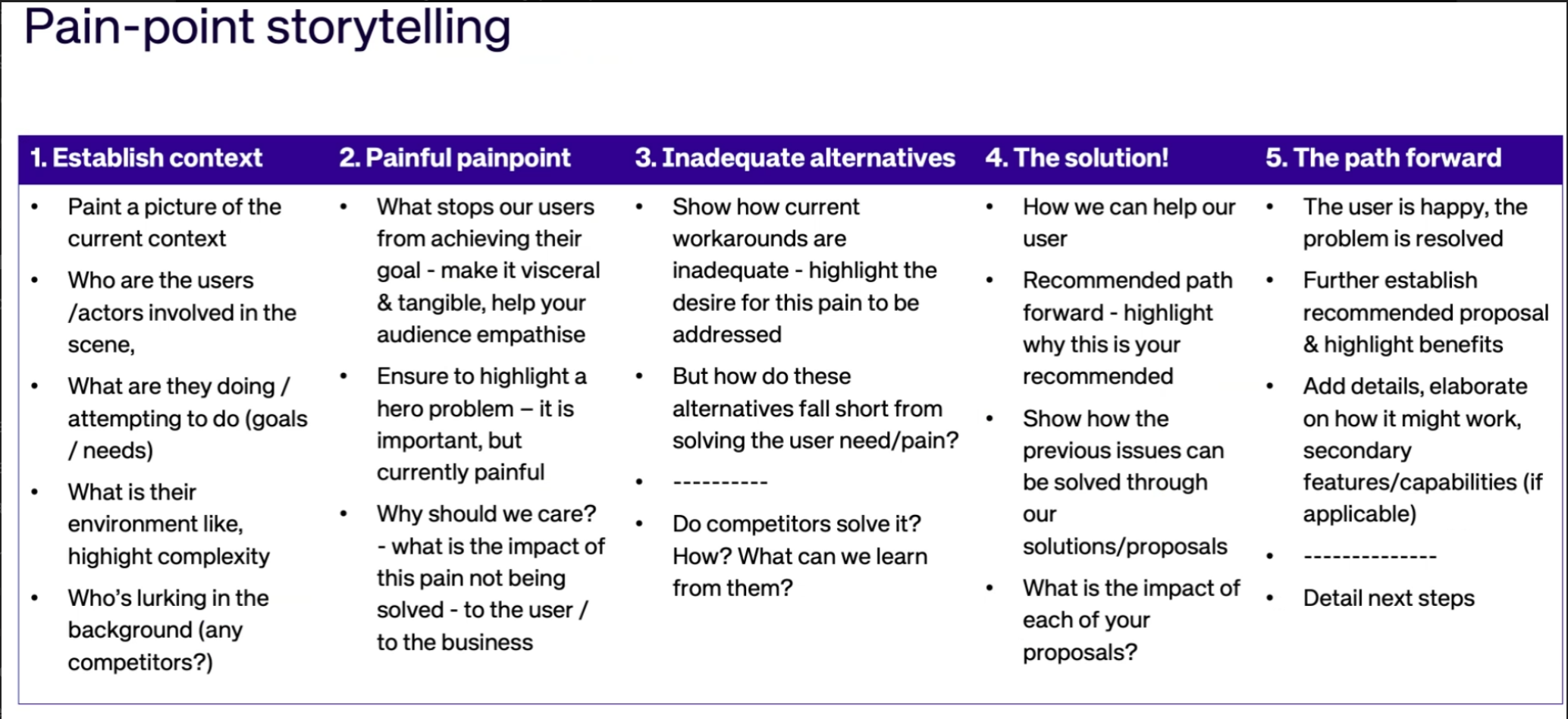
Example : Multi-city bookings represent about 5% of our current bookings, but for travellers who need to book multi-city, it is 100% their reality. Just as any other traveler, they want to find the best price, timing and dates for their booking. But today, the UI makes it really hard for them to find the best option. They are feeling clueless and unsatisfied. We can help users with a more predictable way to select their flight combination for a multi-city trip. First we will do some design iterations with UX experts and quick testing capabilities. Once we find a solution where user is happy
Big shift storytelling
Goal :
- create a sense of FOMO to the audience.
- create a sense of urgency will lead them to act.
Structure of big shit storytelling
There’s a big shift happening Change is coming + bringing us new opportunities
- The shift is undeniable (audience already believe/‘bought-in’)
- Think Gen-AI…
- Or Already Happened (not a hypothetical future)
- Big stakes (not a small thing)
- Huge urgency for your audience
- Challenge conventional wisdom (surprising, but accepted)
- Why now? (inflection point? Window of opportunity)
Risk of ignoring or not responding We can’t (or shouldn’t) ignore what’s happening, because …
- There will be winners & losers
- Big Win (if they adopt your change)
- ‘You don’t want to miss out on this ’ (Loss-aversion)
- Inaction is unacceptable
- Not doing anything = Lose (Those who don’t = doomed to be dinosaurs/losers)
What success could look like Paint a vision! Achieving north star experience
- How would our (new) future be like. - (Thanks to your solution)
- Obviously desirable but hard to achieve (Thus they need your solution)
- Winning is a lucrative opportuniry.
- What it takes to win in this new world
Your recommendation / solutions Your proposal / concept - a solution to the big shift!
- Capabilities as ‘the answer’ (Highlight features to help reach goals)
- Highlight features that enable the vision
- Contrast ‘Old vs. New’ Approach (if possible, make the old outmoded / outdated)
- Testimonials & Responses (Could UXR findings - customers / users
Motivational / We can make it happen! Build trust and excitement in our capability to deliver!
- Success factors (key elements that dictate success)
- Clear eyed about challenges and priorities (we’re not dreaming)
- Feasibility assessment (Show how you may not be starting from scratch, Starting with a POC / pilot; Reliance on existing tech etc.)
- Obstacle dismantling (How the team can handle challenges)
- Clear path forward (Roadmap / Realistic next steps / timeline)
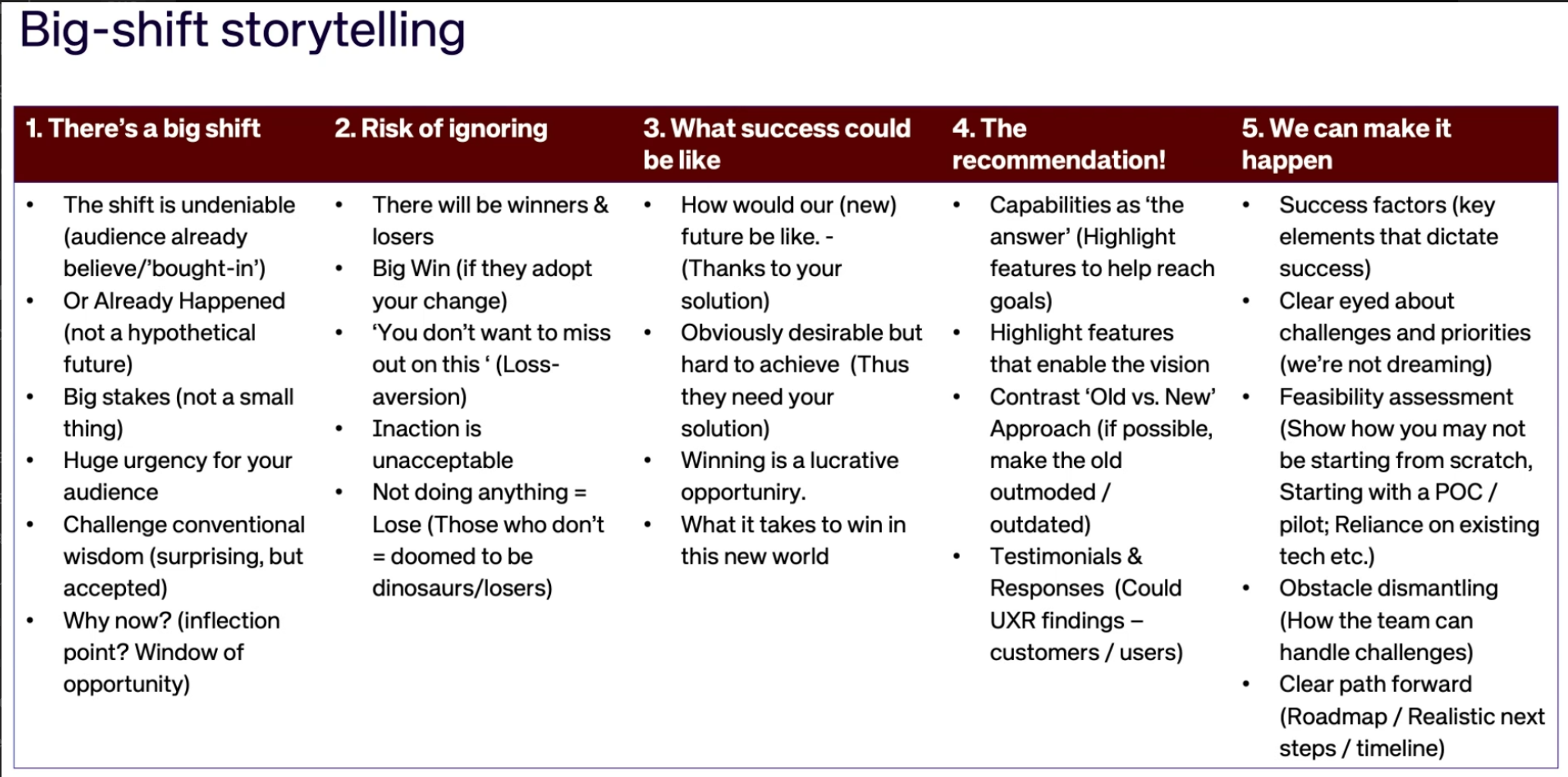
Exemple :
With global warming becoming more and more tangible, and its impact rising, thinking about Sustainability is not an option anymore. The stakes are big, since the survival of not only the industry, but the whole planet is at stake. Since airline industry alone is already responsible for 4% of global warming up to date and rising, we cannot act passively anymore. If we don’t act, we risk being on the bad side of the story, and our future operations are at risk. By taking into account global CO2 emissions in our solutions, transforming the way we work and helping others leading the way, we can be an enabler of sustainable aviation industry in the future.
We will start by optimizing the resource usage of our websites and backend technologies. It will help both performance for users and climate impact. We will also propose new services to track global warming impact of the airline industry, and provide sustainable alternatives to flights when possible, such as train and carsharing. Finally, we will donate a part of our profits to help airlines to get sustainable aviation fuel and keep research going. By sponsoring new type of flights, we are making the only possible move towards our future
Comment : we Need to find an ally on this like PM, because we need a business point of view to get their interest going. It’s not only about the traveler but about creating a sense of FOMO in the business
What makes a good story
Get the basics right
- Authentic: It’s authentic and genuine, reflecting the core values and purpose.
- Relatable: It creates empathy and enables the audience to understand user pain points, desires, and aspirations and allows them to form a personal connection.
- Simple: A good story is clear, and easy to understand.
- Organized: It follows a clear structure that helps convey the main message effectively and makes it easier for the audience to understand and remember.
- Consistent: It aligns with the overall message and is consistent.
- Believable: A good story isn’t too far-fetched.
- Engaging: An effective story captures attention and keeps the audience interested and eager to know what happens next.
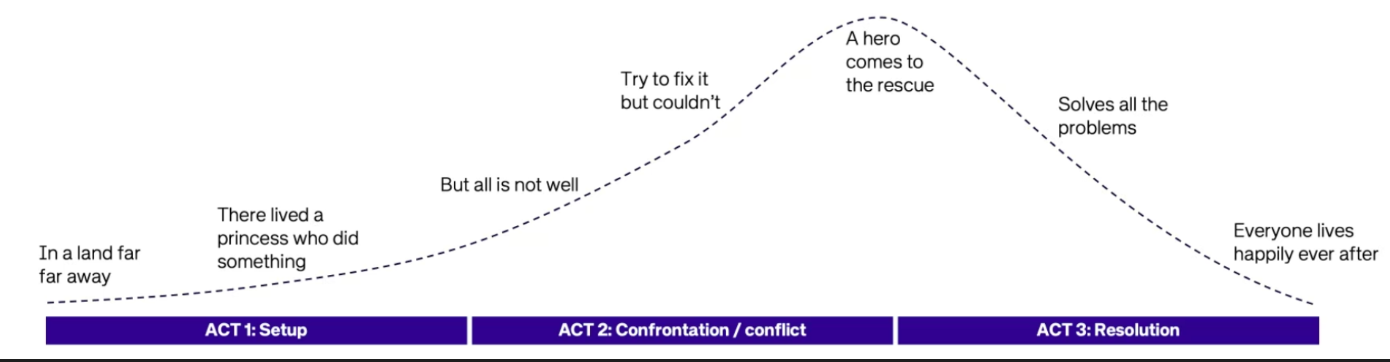
Narrative arc
Increase engagement in UX presentations using a compelling plot
Narrative arc
Toutes les histoires sont constituées de plus petits éléments qui sont des actes narratifs.
The 3-act storytelling model
A tried and tested way of crafting compelling stories that resonate with the audience, enabling the storyteller to create empathy, build rapport and trust as well as inpire your audience to take action.
ACT 1: Setup
ACT 2: Confrontation / conflict
ACT 3: Resolution
Its typically centered on a character (our user) in a particular context (their current behavior), who encounters an ‘inciting incident’ or challenge that needs to be overcome, how they find a resolution to the conflict and goes on to live happily ever after
Provient de : Shamindri’s personal branding and storytelling training
Liens : Raconter une histoire Storytelling mindset
Lien vers l'original
3 Charmes d’Aristote
3 Charmes d’Aristote
3 Types de persuasion
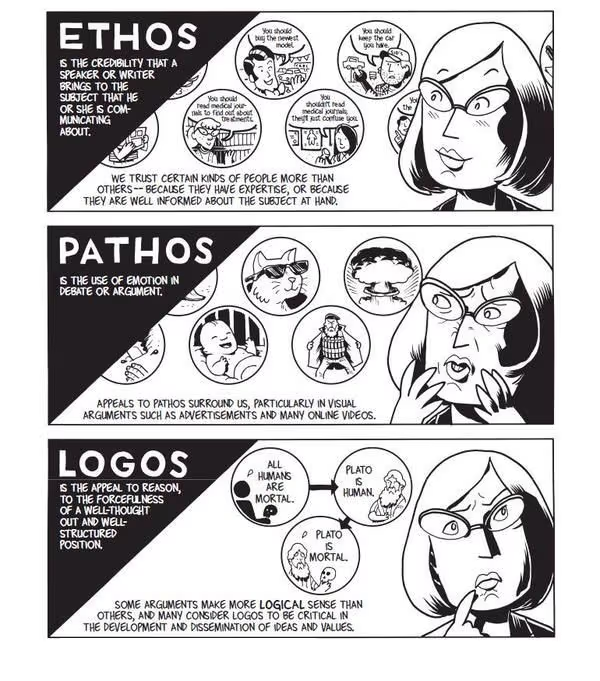
Selon Aristote, il y a 3 dimensions à ce qui Captive l’attention, à ce qui peut nous Convaincre puis nous persuader d’agir:
- Logos: appel à la Raison → Plutôt utilisé quand on cherche à Convaincre
- Pathos: appel aux Émotions → Plutôt utilisé quand on cherche à Persuader
- Ethos : appel à l’Autorité → Plutôt utilisé quand on cherche à influencer
Ethos appeals to the speaker’s status or authority, making the audience more likely to trust them.
Pathos appeals to the emotions, trying to make the audience feel angry or sympathetic
Logos appeals to the audience’s reason, building up logical arguments.
Provient de : Shamindri’s personal branding and storytelling training
Source: Aristotle’s 3 appeals
Lien vers l'original
Elevator pitch
It doesn’t need more than 6-7 slides. You start with 40 slides and end with 6 because you need to be very consistent in the message, make it very believable. What makes it all work is that it’s engaging
End pitch
Never go to an audience with a problem, always with a solution. Always end with call to action and clear path to resolution