Product management is essentially have a good idea/vision of what you are building as a product
10 Dysfunctions of Product Management.pdf Product Management Cheat sheet.png
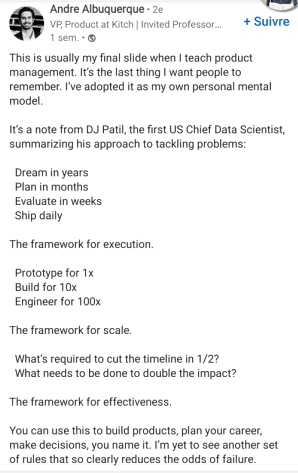
Don’t ask whether or not you should be doing something
“whether or not” questions as particularly problematic when it comes to good decision making. They argue “whether or not” decisions frame the problem too narrowly.
We shouldn’t be asking whether or not we should build a particular feature. Instead, we should be asking, what can we build that provides the most value for most of our customers. We need to broaden our view of the problem. This allows us to consider all the possibilities. — Source
SU-RICE priorization framework
From Anup Sheshadri
I lead the product & growth at Routespring — a fast growing startup which has optimized business travel management for centralized payments. Given the growth phase of the business, we get plethora of feature requests & ideas from prospects, competitors, existing customers, internal teams, and anyone else who has interest in our product. In this flood of different and amazing ideas, how would you make sure that your limited resources focus on the things that matter most? Ultimately, your job is to ensure building things for solving “real” business problems.
Earlier, I had created 3-D Priority Scoring framework, which worked fine for me at the time but didn’t help much for my new problems. So I explored more and RICE framework made some sense. But both of these frameworks ignore the source and user persona for the ideated product feature, which are crucial in making a business case for the product. And that’s how I came up with SU-RICE framework by weighing in Source (S) and User Persona (U) in the RICE framework.
The SU-RICE Prioritization Framework
Pre-requisite: Learn about the RICE framework https://www.intercom.com/blog/rice-simple-prioritization-for-product-managers/
Why is Source of an ideated feature important?
Believe me, you’ll get many amazing ideas and feature requests from different sources, and you might even feel that they will make your product much better by implementing some of them. But, should you weigh an idea from the prospect same as the other idea coming from competing product? Absolutely not! There’s a reason prospect might be engaged with you and not your competitor.
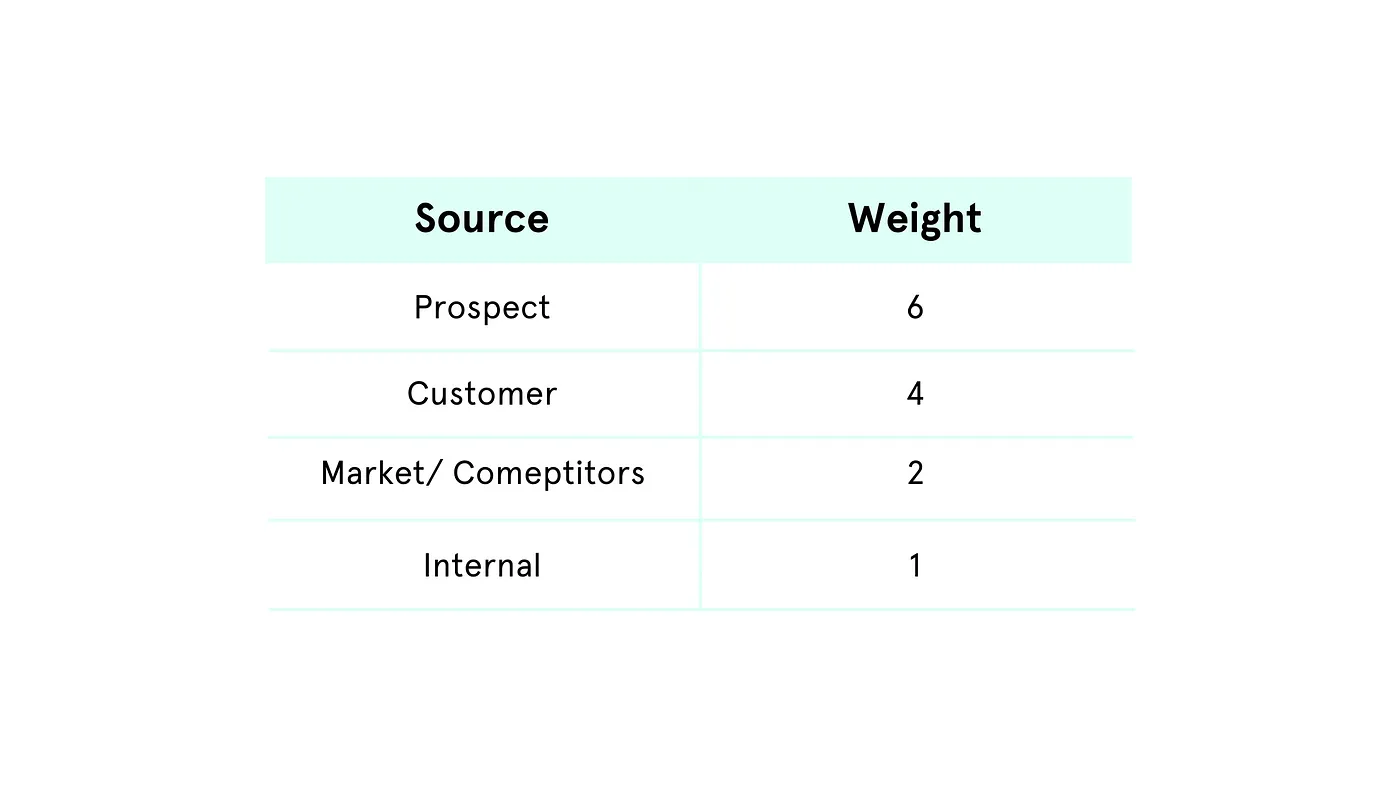
In my case, I had four sources — Prospect, Customer, Market/ Competition and Internal. Depending on your situation, you would weigh one of them higher over the other. Are you trying to optimize acquisition, retention, competition or internal productivity?
Below is an example of how I used weights for our different sources.
Why is User Persona for an ideated feature important?
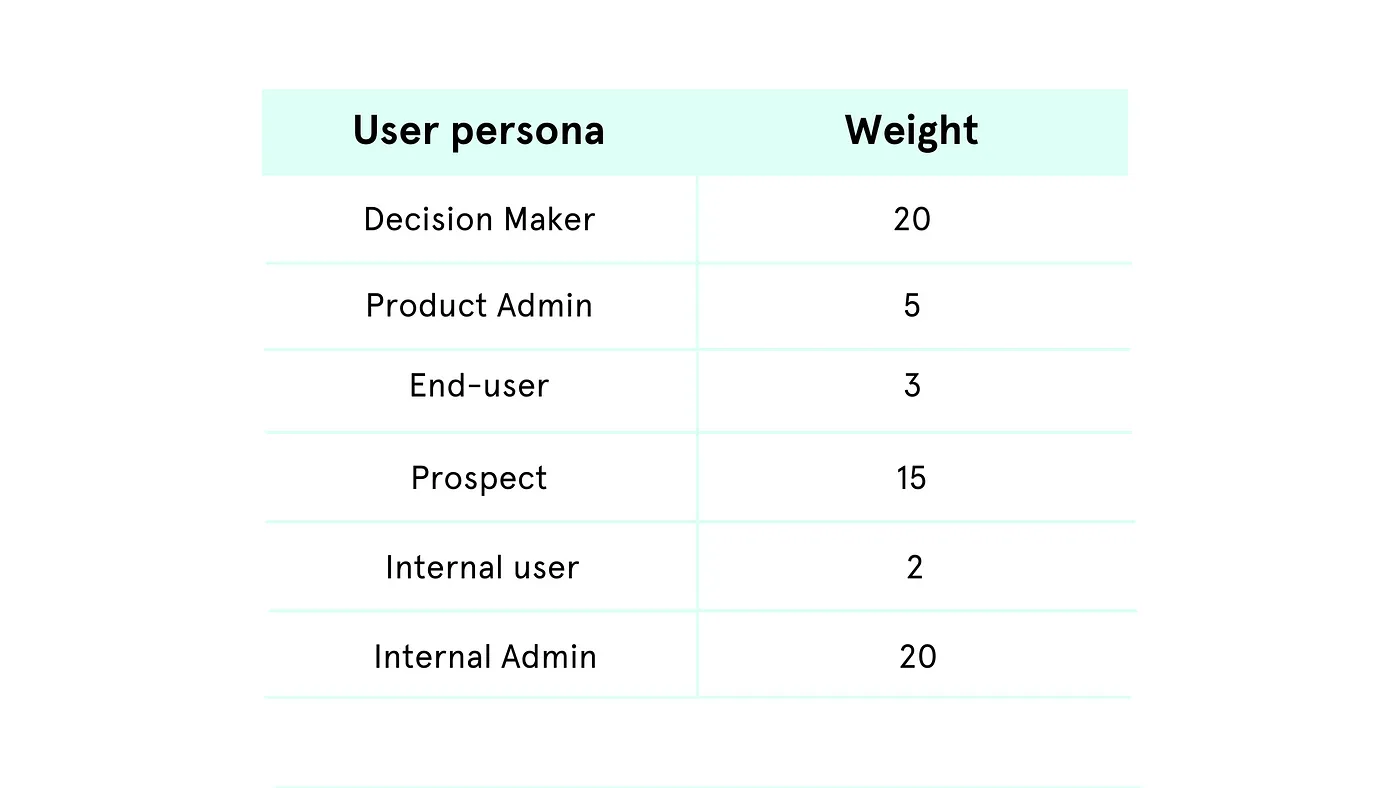
Unlike consumer products, in a SaaS product there are different types of personas involved in using the product. At a higher level you’ve customers, prospects and internal users; and to break it further, the users are decision makers (who see product from a broader business perspective), product admins (who see the product from functional perspective) and end-users (who use the product to get their job done). It makes a completely different business case to build features for decision makers and for end-users. That’s why you don’t want to weigh them equally in prioritization to make a business case.
Below is an example of how I used weights for our different user personas.
How is SU-RICE score calculated?
First, you’ll need to decide which sources and user personas you want to consider for your product.
Second, estimate the weights that you want to apply for each (reach out to me to understand how to decide on weights).
Third, estimate the RICE factors.
Finally, below is the simple formula to calculate the score. Same as RICE score, SU-RICE score also measures “total impact per time worked” but improvised to make a business sense by factoring different sources and user personas in your SaaS product.
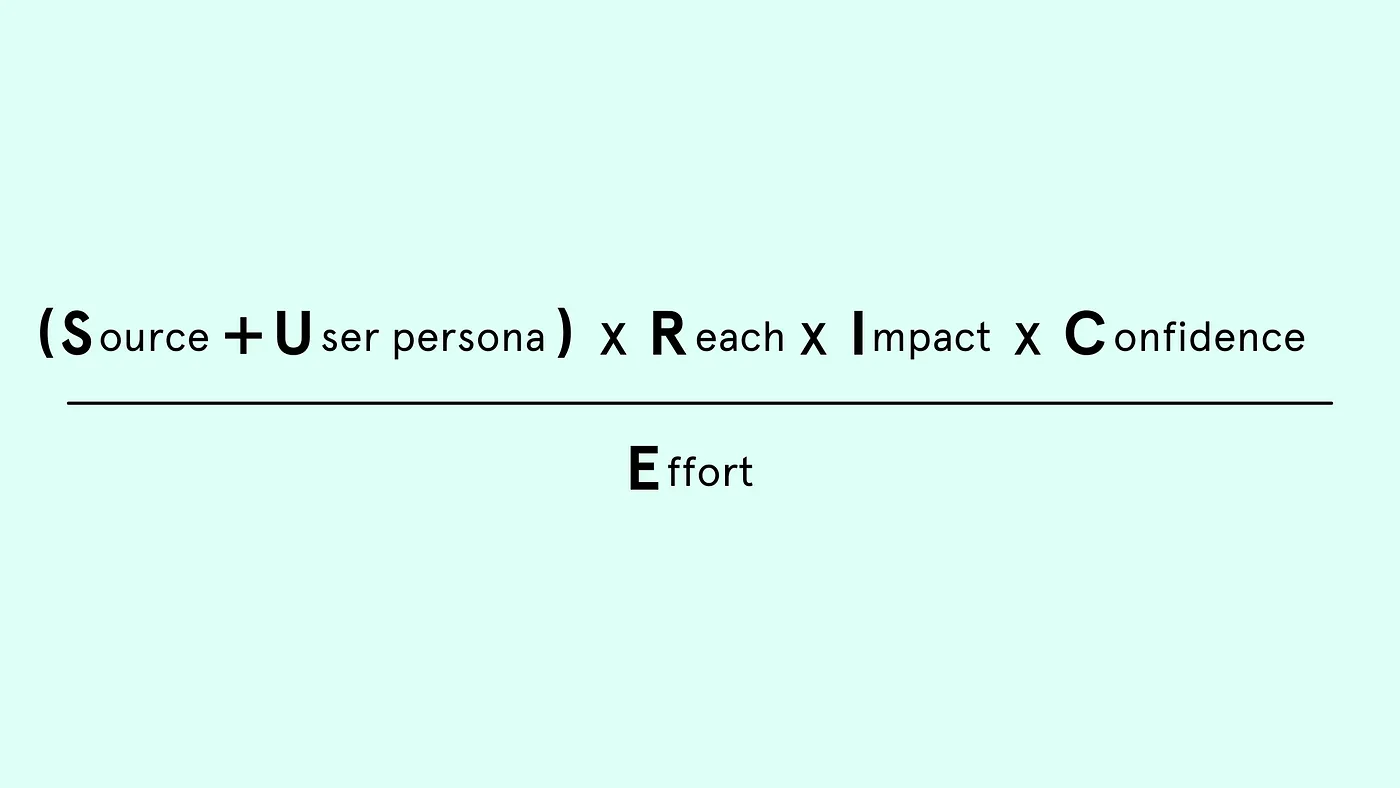
Once you have the score, sort the list on SU-RICE score (highest to lowest) to identify your high priority items. In case you find some scores surprising to your gut, you can consider making changes, or just accept that your gut feeling was wrong :)
Here’s a spreadsheet to set up attributes relevant your business/ product and automatically calculate the score. Feel free to duplicate and modify it for your own use. However, credit to origin will be greatly appreciated :)